Why Every Guitarist Needs a Capo (and the Rookie Mistake Ruining Your Tone)
Learn the best capo to buy, the one style you should avoid, and the setup trick that instantly fixes your tuning.
READY TO FINALLY GET UNSTUCK AND PLAY LIKE THE ARTISTS YOU LOVE?
Join hundreds of guitarists inside The Folk Guitar MasterClass.
Together, we’ll unlock the soul of your acoustic guitar with a clear, step-by-step roadmap that covers every essential technique.
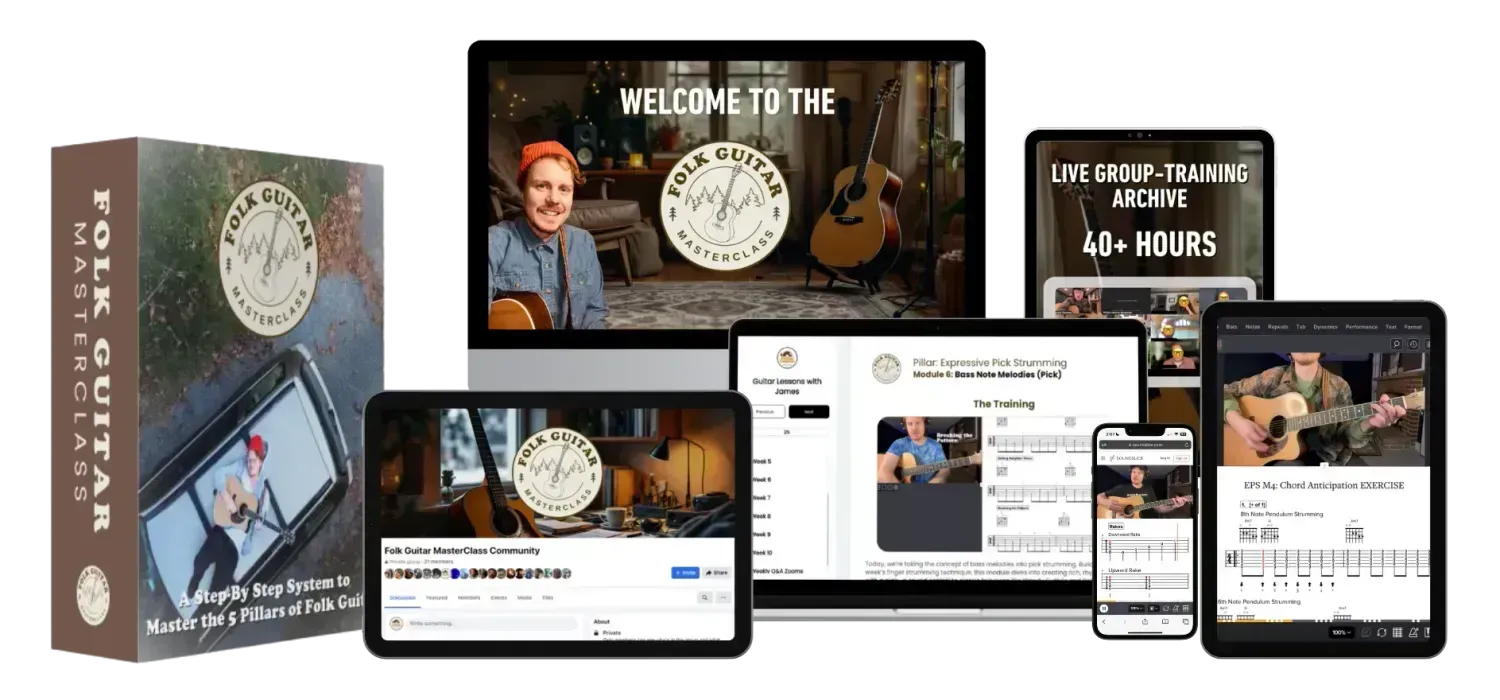
ALL YOUR HEROES STARTED WITH THE SAME HANDFUL OF CHORDS...
YOU JUST NEED TO LEARN WHAT THEY DID NEXT.
READ THE BLOG ARTICLE:
By: James A.M. Downes | 12.01.25
Why Every Guitarist Needs a Capo (and How to Use It Without Ruining Your Sound)
The simple tool that unlocks pro-level tone, better arrangements, and richer chord voicings
Using a capo is one of the fastest ways to upgrade your acoustic guitar tone, unlock shimmering folk voicings, and sound more like the artists you love. Whether you’re a beginner or a seasoned songwriter, mastering how and why to use a capo instantly expands your creativity and opens up parts of the fretboard most players never explore.
In this guide, you’ll learn:
Why every guitarist needs a capo
How capos help you unlock “pro-level” folk chord shapes
What kind of capo to buy
Which capos to avoid
The beginner capo mistake that ruins your tuning
How to use a capo for songwriting, recording, second-guitar parts, and arranging
Video lesson included
Let’s dive in.
Why Every Guitarist Needs a Capo
Using a capo does far more than raise the pitch. A capo is one of the few tools that can instantly:
1. Unlock shimmering chord voicings you hear in pro folk recordings
Putting a capo at the 3rd, 5th, or 7th fret allows you to play familiar shapes in new positions.
A simple C chord suddenly sounds like a beautifully airy, nostalgic dream when played higher up the neck.
This is the exact trick used by:
Tom Petty
Bob Dylan
Fleetwood Mac
The Lumineers
Gregory Alan Isakov
These artists rely on capo voicings to get that iconic shimmering folk sound.
2. Play (and write) songs you couldn’t otherwise play
Many iconic songs literally require a capo to sound correct:
“Wildflowers” – Tom Petty
“Wonderwall” – Oasis
“Landslide” – Fleetwood Mac
Without the capo, the magic is gone.
3. Write second-guitar parts that instantly sound bigger
If two guitars play the same shapes in the same position, your sound gets narrow and muddy.
Capo trick for pro-level arrangements:
Guitar 1 plays open-position chords
Guitar 2 uses a capo on fret 5–7
Guitar 2 plays different shapes of the same chords (C → F, G → C, D → G)
Your mix suddenly becomes:
Wider
Richer
More “pro studio”
More emotional
This one trick alone transforms home recordings.
What Kind of Capo Should You Buy? (And Why Most Brands Suck)
Best Capo Recommendation: Kyser Quick-Change Capo
~$22
Easy to use
Stays strong for years
Sits above the neck so it doesn’t block your thumb
Perfect for beginners and advanced players alike
(Not sponsored, but Kyser… call me. 😂)
Which Capos You Should Avoid (Important!)
Avoid capos with bulky clamping mechanisms behind the neck.
Why?
Because they block your thumb and make proper fretting nearly impossible—especially:
When you’re fretting up the neck
When using thumb-over techniques
When playing advanced chord voicings
These capos physically get in your way and ruin your accuracy.
Stick with capos where the mechanics sit above the neck. Your hand will thank you.
The Beginner Capo Mistake That Ruins Your Sound
Even the best capos can pull your guitar sharp if you use them wrong.
Here’s the correct process:
How to Apply a Capo Without Ruining Your Tuning
1. Tune your guitar first (before placing the capo).
2. Open the capo fully and place it gently on the neck.
3. Make sure the strings aren’t bent upward or downward.
4. Retune after the capo is on — especially your thicker strings.
If using tuning pegs, go slightly under pitch, then tune up into perfect pitch to lock the peg.
Do this every time, and you’ll always sound great—even playing with others.
Video Lesson: Why Every Guitarist Needs a Capo

Watch the full tutorial to see:
Exactly why capos matter
How to create shimmering chord voicings
How to avoid tuning issues
The best and worst capo designs
Step-by-step capo placement and tuning
Want to Level Up Even Further? Try This:
Now that you know how to get your best tone with a capo, put it to the test…
Learn how to fingerpick “Landslide” using your capo.
This iconic folk pattern is one of the best exercises for developing:
Control
Emotion
Dynamics
Flow
👉 Click here to learn “Landslide” in my free fingerpicking lesson.
Final Thoughts: The Capo Is Your Secret Weapon
A capo isn’t just a tool. It’s:
A tone-shaper
A songwriting hack
A recording cheat-code
A key to sounding more like your heroes
Use it to escape the bottom 3 frets, unlock pro-level voicings, and give your songs the depth and sparkle they deserve.
Have fun experimenting—and let me know what you create.
May the folk be with you,
// James
SUBSCRIBE TO THE TROUBADOUR TRAIL GUIDE NEWSLETTER
Tips to help you get that nostalgic folk guitar sound that "hurts so good," sent straight to your inbox.
🎁 Instant Sign-Up Bonus 🎁
Awesome Interactive Video/Tab Lesson for
“Hello in There,” by John Prine
I HATE spam. Your email address is 100% secure